

School washrooms play a critical role in student health, behaviour and overall educational experience. Poorly maintained or outdated facilities can negatively impact their attendance, long-term hygiene habits and even confidence.
Whereas, well-designed, modern washrooms encourage good hygiene, reduce vandalism and create a more positive school environment.
However, upgrading your school toilet facilities is not just about replacing broken or outdated fixtures; it’s about creating a safe, hygienic and inclusive space that supports student well-being.
In 2026, that means washroom design that combines durability, modern technology and carefully planned layouts that will meet the evolving expectations of all staff, students and their parents.
If your school washrooms are in need of some attention this year, here is our expert advice on how to upgrade school toilet facilities with modern equipment in 2026, with minimal disruption to the learning environment.
1. Plan installation around school schedules
First and foremost, timing is crucial when upgrading your school facilities. Refurbishment projects can take between two and four weeks, but possibly longer depending on the scope and nature of the project.
That is why most choose to undergo these washroom refurbishment projects during the school holidays, wherever possible.
Working with expert washroom specialists also helps ensure that the project is delivered efficiently, safely, and on time, so you can minimise disruptions to the student experience. More on this in the next section.
2. Work with school washroom experts
Upgrading school toilets is a complex process — one that requires expertise in design, compliance and installation, as well as professionalism and time keeping. Specialist washroom refurbishment providers offer:
Years of industry expertise
Bespoke washroom design tailored to your school
Full project management
High-quality materials and workmanship
Working with experts like the team at Cr8tive Washrooms also ensures your facilities meet modern standards and improve student well-being, all while delivering long-term value.
3. Take a strategic design approach
To successfully upgrade school toilet facilities, you must begin by understanding your students and what they need. For example, primary schools, secondary schools and colleges will all have different needs in terms of height, layout and supervision based on their students.
As a general rule, modern school toilet design might include:
Open-plan entrance areas for passive supervision or spot-checks
Clear zones within the layouts for privacy and safeguarding
Flexible configurations, including accessible, unisex or gender-neutral options
Careful planning of your school washroom facilities ensures the space is both functional and compliant, while also creating comfortable, safe spaces that reduce opportunities for antisocial behaviour.
4. Invest in durable, hygienic materials and systems
Durability is non-negotiable in high-traffic school environments. Modern facilities increasingly use materials such as:
Solid Grade Laminate (SGL) cubicles
Stainless steel fixtures
Solid surface worktops and sinks
These materials are impact-resistant, waterproof and easy to clean. Many also feature antibacterial treatments that can eliminate up to 99% of bacteria, helping to maintain hygiene standards throughout the school day.
Integrated Panel Systems (IPS) are another key feature of modern washrooms. Installing these systems enables you to conceal pipework and cisterns behind sleek panels, creating a cleaner, more hygienic space.
Choosing long-lasting materials and smart systems like this not only improves hygiene but also reduces lifecycle costs by minimising repairs and replacements.
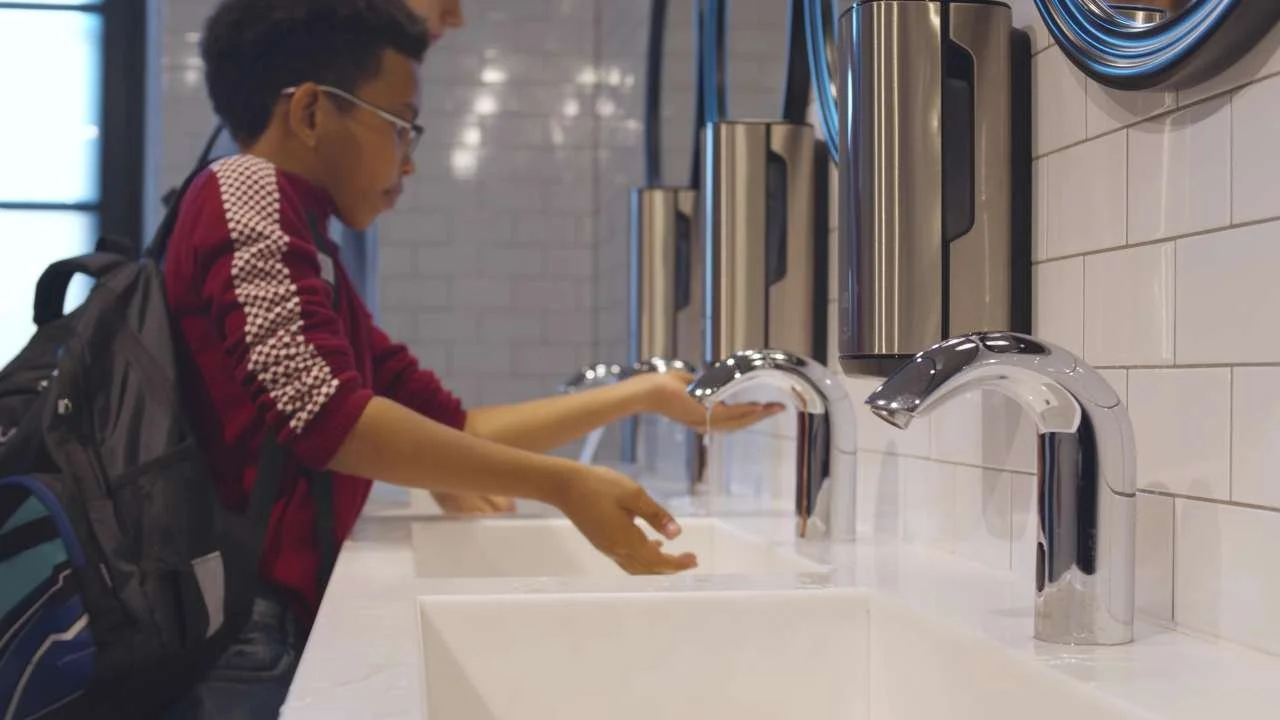
5. Upgrade to touch-free technology
In 2026, touch-free solutions are becoming the standard in modern school washrooms, and if you haven’t already replaced old, outdated fixtures and fittings, then this should be a top priority.
These might include:
Sensor-activated taps
Automatic soap dispensers
Touchless flush systems
High-efficiency hand dryers
Automatic lighting
Swing doors
Introducing these technologies can significantly reduce the spread of germs while encouraging better hygiene habits among students of all ages. They also minimise maintenance by reducing touchpoints and, therefore, wear and tear on your school washroom fixtures.
6. Improve handwashing and drying facilities
Since the pandemic, hand hygiene remains a top priority in shared spaces like schools. Modern washroom upgrades should focus on making handwashing easy to access, simple to use and suitable for all ages.
Popular washroom solutions include larger multi-user sinks, which allow multiple pupils to wash their hands simultaneously, which is ideal for busy break times. Pairing these with efficient hand drying or paper towel systems ensures a seamless hygiene process that students are more likely to follow.
7. Enhance privacy and inclusivity
Privacy and inclusivity should be key considerations in modern school toilet design. Full-height cubicles, improved door locks and better partitioning help ensure dignity for all users. At the same time, many schools are adopting inclusive layouts such as:
Individual unisex cubicles
Accessible toilets for SEND students
Thoughtfully designed changing areas
By opting for these features, you can create a safe and welcoming environment for every pupil, while aligning with modern safeguarding standards.
8. Focus on water efficiency and sustainability
Sustainability is a growing priority in school refurbishment projects; as a result, modern washroom upgrades often include low-flow toilets and taps, sensor-controlled water usage and durable materials with a longer lifespan.
These features not only help schools to reduce their water consumption and operational costs, but also support wider environmental goals.
9. Add colour and child-friendly design elements
Last but not least, modern school toilets are moving away from dull, institutional designs. Instead, choosing to incorporate elements like:
Bright colours or motifs for younger pupils
Neutral, contemporary finishes for older students
Engaging, welcoming environments for all
Colourful and well-designed spaces can improve student behaviour and encourage respect for facilities, reducing vandalism and making them easier to maintain over time. Plus, these investments show students that you’re prioritising their well-being, safety and overall happiness.
You can check out some of our past school projects over on our case studies page.
Final thoughts
Upgrading your school toilet facilities is about far more than replacing old fixtures and fittings. It’s an opportunity to create a space that supports student well-being, promotes hygiene, and enhances the overall school experience.
By investing in durable materials, smart technology and thoughtful design, schools can transform their outdated washrooms into modern, future-proof facilities that serve pupils and staff for years to come.
If your current facilities are falling short, now is the time to rethink what a school washroom should be.