

Commercial washroom trends to know for 2026
Are you investing in your commercial washrooms next year?
No matter whether you’re refurbishing your office, retail, hospitality, leisure or industrial space, staying competitive means embracing more than just some fresh tiles.
From high-tech automation to sustainable features and elevated design, tomorrow’s washrooms are smarter, greener and more user-friendly than ever before.
At Cr8tive Washrooms, we have over 20 years of experience in commercial refurbishments, and these are the trends you need to be investing in next year.
1. Touchless and smart fixtures
The shift toward sensor-operated taps, soap dispensers, and flush mechanisms has already gained traction, but in 2026, touchless fittings will be the standard in most commercial spaces.
This is particularly true for high-traffic areas like airports, corporate headquarters and schools; this is no longer “luxury,” it is becoming expected.
Many smart toilets and urinals now come equipped with automatic flushes, water-saving flush valves, and even self-cleaning mechanisms, helping to reduce touchpoints and improve hygiene. Similarly, touchless taps reduce the risk of cross-contamination and reassure users about cleanliness.
Other smart features will include automated dispensers that track toiletries and notify staff when supplies run low. This can help to cut waste and ensure your washrooms are always properly stocked.
2. Sustainability and water saving essentials
As environmental standards become more critical, commercial washrooms are shifting toward more sustainable materials, fixtures and fittings. Sustainability isn’t just good for the planet; it also lowers your running costs and supports ESG strategies that allow you to meet your business targets.
This might include low-flow and sensor-flush toilets that significantly cut water use, as well as smart taps that are more efficient at reducing water waste. In terms of materials, eco-friendly materials, from recycled composites to low-VOC paints and sustainably sourced surfaces, are becoming the norm.
3. Minimal and modern aesthetics
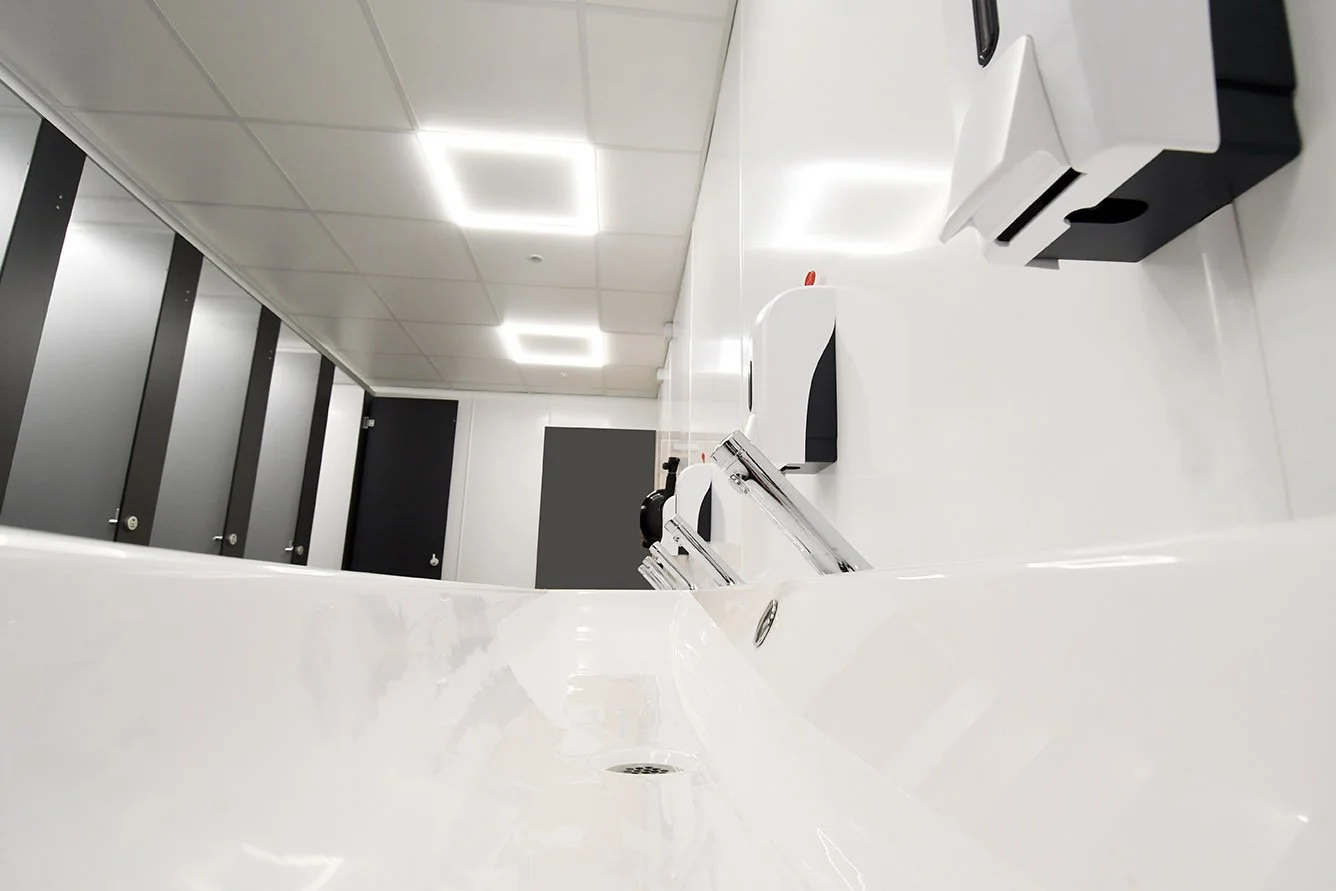
Commercial washroom design trends are moving toward sleek minimalism; clean lines, neutral tones and understated fixtures that feel both modern and timeless.
Some of the best ways to achieve this aesthetic include frameless glass, solid panels, flush-front cubicle doors and concealed hardware to help create a seamless, uncluttered look. This is also great to stop the build up of dirt and bacteria.
Continuous surfaces, for example, countertops that flow into walls or floors, are replacing patchwork tiling that can become discoloured and harbour germs. The result is a cohesive, calm space that reflects that of a high-end spa rather than your average commercial toilets.
For many modern businesses, especially those in tech, hospitality or creative industries, bathrooms are part of the overall experience and they should feel polished, professional and reflect the brand.
4. Prioritising wellness and comfort
Your bathrooms shouldn’t be just a functional necessity; they should be an expression of comfort, wellness and even subtle luxury.
Smart toilets, touchless fixtures, odour control features and warm lighting are moving from high-end homes into commercial settings. Plus, material choices, such as warm metallic finishes, natural stone and wood-like textures can help create a relaxing, comfortable environment.
Subtle, soft tones (think pistachio greens, greys and muted earth shades), layered lighting, and textured walls will also be a popular way to turn ordinary washrooms into inviting spaces. This kind of design helps make washrooms feel less like a functional afterthought, and more like an integrated part of a building’s atmosphere.
5. Inclusive, accessible and flexible layouts
In 2026, inclusivity, privacy and flexibility should be your top priorities. Commercial washrooms are no longer simply male and female cubicles; many new-builds and refurbishments are choosing to embrace unisex or gender-neutral stalls, often single-occupancy, to support inclusivity.
Accessible design is also vital, and now, it’s important that toilets, sinks and fixtures not only meet accessibility standards, but exceed them, to help ensure compliance and dignity for all users.
Flexible layouts, such as reconfigurable cubicles, modular partitions or Superloo pods, will make it easier to adapt spaces for changing needs, staff numbers or demographics.
Are you ready to embrace the trends?
For any business designing new commercial washrooms or refurbishing existing spaces in 2026, these trends offer a roadmap for creating hygienic, sustainable and stylish spaces that are future-ready.
And if you need help implementing these changes next year, Cr8tive Washrooms can help. Our experience across schools, offices, airports, hospitality venues and industrial settings means we know how to balance aesthetics, compliance and practicality.
So, whether you’re looking for a simple refresh or a full-scale redesign, get in touch with our team today to start your washroom transformation journey.